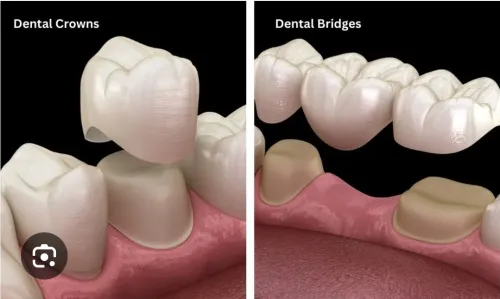

Dental caps, also known as dental crowns, are used to restore damaged or decayed teeth. There are several types, each with different materials, strengths, aesthetics, and costs.
Here are the main types of dental caps/crowns:
1. Porcelain-Fused-to-Metal (PFM) Crowns
Structure: Metal interior for strength, porcelain exterior for appearance.
Pros:
Strong and durable.
Looks more natural than full metal.
Cons:
Porcelain can chip.
A dark line may appear at the gum line over time.
Best For: Back teeth or areas where aesthetics and strength are both important.
2. All-Ceramic or All-Porcelain Crowns
Material: Made entirely of ceramic or porcelain.
Pros:
Best natural color match.
Metal-free — ideal for patients with metal allergies.
Cons:
Less durable than metal-based crowns.
More prone to chipping, especially on back teeth.
Best For: Front teeth for best aesthetics.
3. Metal Crowns
Material: Gold alloy, palladium, nickel, or chromium.
Pros:
Extremely durable — resists wear and fracture.
Requires less tooth structure removal.
Cons:
Metallic color — not aesthetic.
Best For: Molars or teeth not visible when smiling.
4. Zirconia Crowns
Material: Zirconium dioxide — a very strong ceramic.
Types: Monolithic zirconia (opaque but strong) and layered zirconia (more natural-looking).
Pros:
Highly durable and biocompatible.
Better aesthetics than metal.
Cons:
Can be abrasive to opposing teeth if not polished.
Best For: Both front and back teeth depending on formulation.
5. E-Max Crowns (Lithium Disilicate)
Material: High-strength ceramic (lithium disilicate).
Pros:
Very natural-looking and translucent.
Stronger than traditional porcelain.
Cons:
Slightly less durable than zirconia for back teeth.
Best For: Front teeth and premolars.
6. Resin Crowns (Temporary Crowns)
Material: Acrylic or composite resin.
Pros:
Inexpensive.
Quick and easy to place.
Cons:
Not durable — only meant for short-term use.
Best For: Temporary use while waiting for a permanent crown.
Keywords