Testing for allergies in children is important when they show signs like frequent sneezing, rashes, eczema, wheezing, digestive issues, or unexplained reactions to foods or environmental triggers. Here are the main tests used to diagnose allergies in children, categorized by type and method:
🧪 Common Allergy Tests for Children
1. Skin Prick Test (SPT)
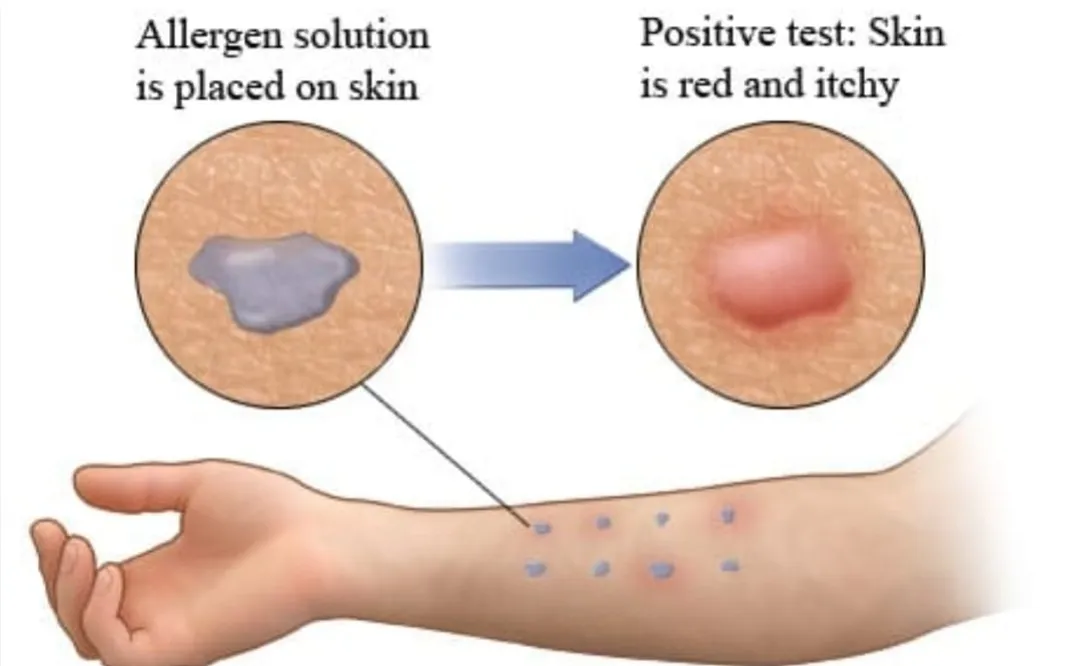
What it is: Tiny amounts of allergens are pricked into the skin (usually forearm or back).
Purpose: Detects immediate allergic reactions to things like pollen, dust mites, foods, pet dander, etc.
Results: Appear in 15–20 minutes as small red bumps if positive.
Good for: Children 6 months (but more reliable after age 2).
2. Blood Test (Specific IgE Test ImmunoCAP)
What it is: Measures levels of allergen-specific IgE antibodies in the blood.
Purpose: Identifies allergic responses to specific triggers.
Good for: Children who can’t tolerate skin tests (e.g.severe eczema, on antihistamines).
Takes: A few days for results.
3. Patch Testing
What it is: Used to test delayed allergic reactions (especially contact dermatitis).
Method: Patches containing allergens are placed on the skin (usually the back) for 48 hours.
Good for: Identifying reactions to metals, fragrances, preservatives, etc.
Not used for: Food or airborne allergies.
4. Oral Food Challenge (OFC)
What it is: Child eats small amounts of a suspected food under medical supervision.
Purpose: Most accurate test to confirm a food allergy.
Done by: Trained allergy specialists only due to risk of severe reaction (anaphylaxis).
Keywords