A food allergy is an immune system reaction that occurs soon after eating a specific food. Even a tiny amount of the allergenic food can trigger symptoms ranging from mild to severe or even life-threatening (anaphylaxis).
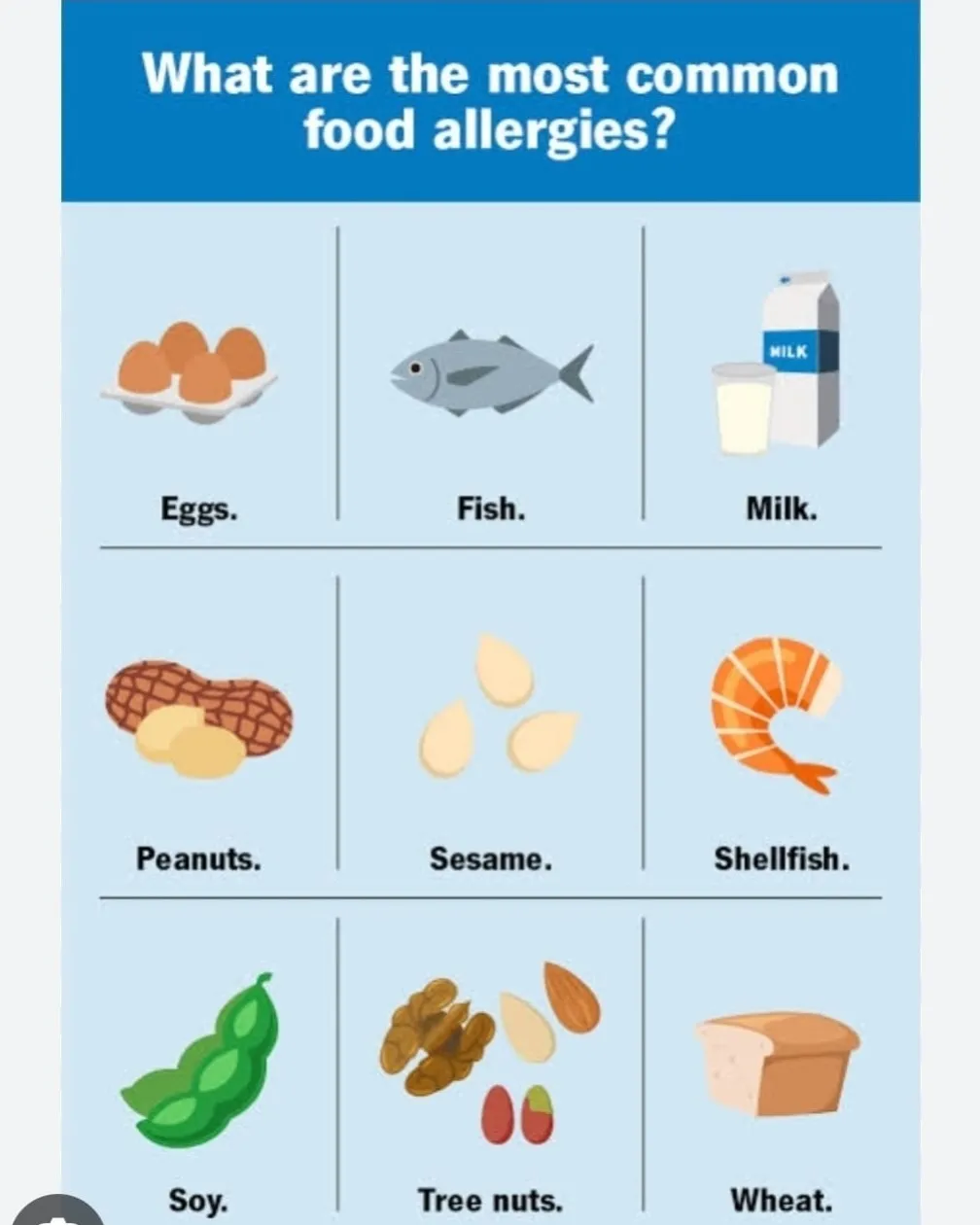
⚠️ Common Food Allergens (The "Big 9")
These foods account for the majority of allergic reactions:
Milk
Eggs
Peanuts
Tree nuts (e.g., almonds, walnuts, cashews)
Fish
Shellfish (e.g., shrimp, crab)
Wheat
Soy
Sesame (added to the U.S. list in 2023)
🧬 How Food Allergies Work
Sensitization: First exposure causes the immune system to create IgE antibodies.
Reaction: Upon future exposure, the body releases chemicals like histamine, leading to symptoms.
🤕 Symptoms
Usually appear within minutes to 2 hours:
Mild to Moderate:
Itching or tingling in the mouth
Hives, eczema, or swelling (face, lips, tongue)
Stomach pain, nausea, vomiting, or diarrhea
Severe (Anaphylaxis – a medical emergency):
Throat tightness or swelling
Difficulty breathing or wheezing
Drop in blood pressure (shock)
Rapid heartbeat
Loss of consciousness
🩺 Diagnosis
Skin prick test
Blood test (IgE levels)
Elimination diet
Oral food challenge (done in a clinical setting)
🛑 Treatment
Strict avoidance of the allergen
Epinephrine auto-injector (e.g., EpiPen) for emergencies
Antihistamines for mild reactions
✅ Managing Food Allergies
Read food labels carefully
Ask about ingredients when eating out
Carry epinephrine if prescribed
Create an allergy action plan
Inform schools/workplaces of the allergy
Keywords