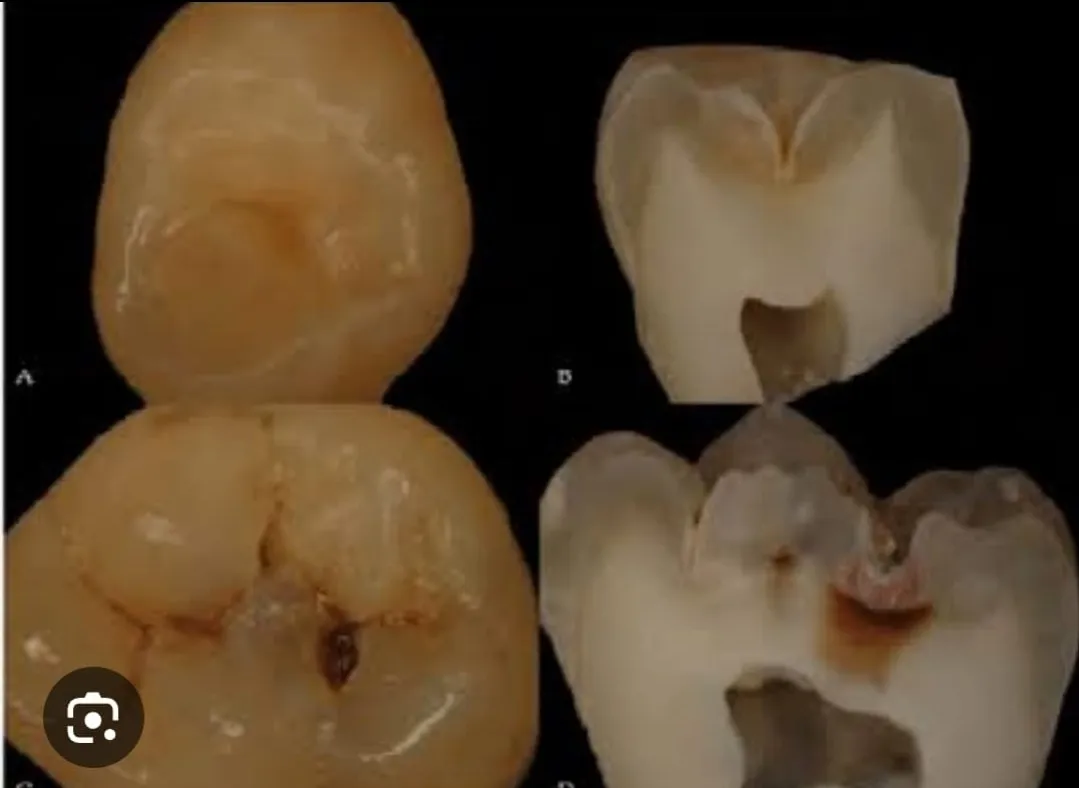
An initial carious lesion, commonly known as an incipient lesion or "white spot lesion," is the earliest detectable stage of dental decay. At this stage, acid produced by dental plaque biofilm has caused subsurface demineralization of the tooth enamel, but the outer enamel surface remains structurally intact without any physical breakdown or cavitation.Clinical Appearance & CharacteristicsVisual
Presentation: It usually appears as a chalky, opaque white spot on the tooth surface. This opacity becomes much more pronounced when the tooth is dried with air.
Surface Texture: Active initial lesions feel slightly rough or matte, while arrested (healed) initial lesions feel smooth and may look shiny or slightly discoloured (brownish).
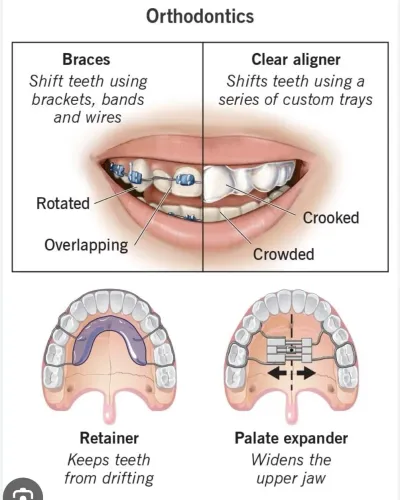
Location: They are frequently found in plaque-retentive areas, such as along the gumline (cervical third), in between teeth (proximal surfaces), or around orthodontic brackets.Reversibility: Because there is no cavity (hole) yet, the mineral loss is completely reversible.
Keywords