
Tooth replacement is a dental procedure to replace missing or severely damaged teeth. Replacing missing teeth is important for both function (chewing, speaking) and aesthetics, and to prevent bone loss and shifting of nearby teeth.
🦷 Why Replace Missing Teeth?
Restore ability to chew and speak properly
Maintain facial structure and prevent sunken appearance
Prevent neighboring teeth from shifting
Improve smile and confidence
✅ Tooth Replacement Options
1. Dental Implants
What: Titanium post surgically placed in the jawbone, topped with a crown.
Pros:
Long-lasting (often lifelong)
Feels and functions like a natural tooth
Prevents bone loss
Cons:
Costly
Requires surgery and healing time (3–6 months)
Requires adequate bone structure
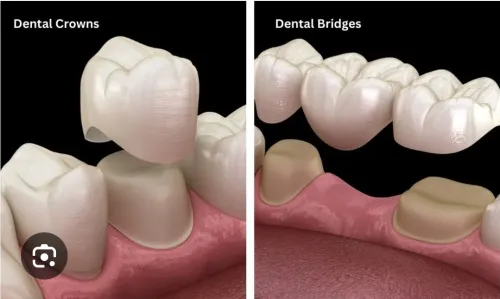
2. Fixed Dental Bridge
What: A prosthetic tooth anchored to adjacent teeth.
Pros:
More affordable than implants
Doesn’t require surgery
Cons:
Requires grinding down healthy adjacent teeth
Doesn’t prevent bone loss in the gap
Lasts ~10–15 years
3. Removable Partial Denture
What: A removable appliance replacing one or more teeth.
Pros:
Least expensive option
Non-invasive
Cons:
Less stable than bridges or implants
May need regular adjustments
Can feel bulky
4. Complete Dentures
What: Full arch replacements for all missing teeth (upper or lower jaw).
Pros:
Affordable for full-mouth restoration
Non-surgical
Cons:
Can slip or cause discomfort
Requires adhesives
Doesn’t preserve bone
5. Implant-Supported Dentures (All-on-4)
What: Dentures anchored by multiple implants.
Pros:
More stable than traditional dentures
Better chewing function and comfort
Cons:
More expensive than regular dentures
Surgical procedure required
Keywords